
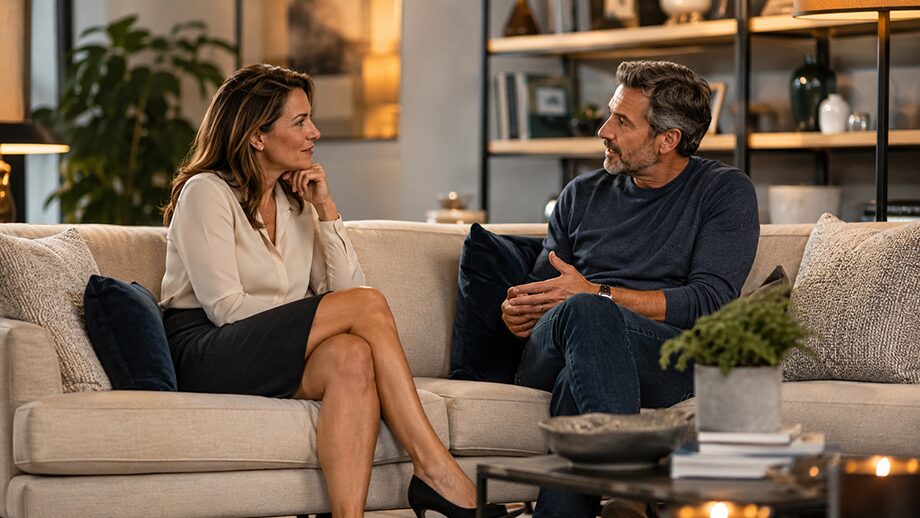
Choosing Not to Act: Claire’s Story of Bicuriosity Without Exploration
Claire is 47, married for twenty-one years, and bicurious for at least thirty. She has never been with a woman. She has decided she probably never will. And she wants other women to know that’s not a failure — it’s a choice. This is her story, a composite inspired by conversations with women in our community. Details changed for privacy.
Claire wants to start with something she doesn’t see talked about enough.
Most bicurious content assumes you’re going to do something about it. Explore. Tell your partner. Open up. Act.
Claire never has. She’s been quietly, certainly bicurious since at least her twenties. She knows what she feels. She knows the attraction is real. And she has made the conscious, repeated choice to stay monogamous — not because she’s repressing anything, but because, when she’s honest with herself, that’s the life she actually wants.
She wants other women to know: choosing not to act is also a complete answer.
When She First Knew
Claire figured out she was bicurious in college. There was a roommate who made her feel things she’d never felt around her boyfriend. She didn’t have language for it then, but she remembers exactly what it felt like — a kind of magnetic pull that confused her enough to make her want to be near it constantly.
Nothing happened. The roommate was straight. Claire was dating her now-husband. But the experience stayed with her, and so did the recognition: she was attracted to women too.
Over the years, she’d notice it occasionally. A coworker. A friend. A stranger. Sometimes someone she barely registered consciously, but who occupied her thoughts later. She came to understand this was a real, ongoing part of her sexuality — not a phase, not a mistake.
Why She Decided Not to Act
Claire is clear that her decision isn’t about morality or shame.
“I don’t think there’s anything wrong with bicurious women exploring,” she says. “I think it’s wonderful when women act on it and find joy in it. That just isn’t the right call for me.”
Her reasons are practical and personal:
She loves her marriage. Not in a settling way — in an actually-loves-it way. After twenty-one years, she still likes her husband as a person. She doesn’t want to introduce something that might destabilize what she has.
Her husband isn’t comfortable with it. She told him about her bicuriosity ten years ago. He listened, took it in, and was honest: he wasn’t okay with her acting on it. He’s not threatened by her feelings — he just doesn’t want their marriage to be non-monogamous. She respects that.
She knows herself. Claire is someone who attaches. She’s pretty sure that if she got involved with a woman, it wouldn’t stay casual. That’s not what she wants right now — emotional entanglement with someone outside her marriage feels like it would create more pain than pleasure.
She has enough. She has a full life. Kids, friends, work she likes, hobbies. She doesn’t feel like something is missing. The bicuriosity is real, but it’s not a desperate need.
“I’m not white-knuckling my way through life. I’m just choosing the life I actually want, which happens to not include physical exploration with women.”
What It Looks Like in Practice
Claire’s bicuriosity doesn’t disappear just because she’s chosen not to act on it. It still shows up in her life. She just relates to it differently.
Noticing Without Pursuing
When she notices attraction to a woman, she lets herself notice it. She doesn’t shove it down or pretend it isn’t there. She just… observes it, the way you’d observe noticing it’s raining outside. Information. Not a directive.
Fantasy as a Real Outlet
Claire has a rich internal fantasy life. She reads sapphic fiction. She watches content that features women. She has scenarios that play in her head when she’s alone. None of this feels like a poor substitute for the “real thing.” It feels like a real part of her sexuality — one she gets to enjoy on her own terms.
Sharing With Her Husband
Her husband knows. They’ve talked about her bicuriosity many times over the years. Sometimes she’ll mention an attraction. Sometimes they’ll watch a show with a queer storyline and discuss it. The topic isn’t taboo between them — it’s just one of many parts of her she shares with him.
Sometimes the fantasies come into their sex life. She’ll describe one to him in bed. He’s not uncomfortable with the fantasy, just the physical reality of her acting on it. And that’s a workable arrangement for them.
Friendships Without Drama
Claire has female friends she finds attractive. She’s at peace with that. She doesn’t avoid them or police herself. She just enjoys their company. The attraction isn’t a problem to manage — it’s just a feature of how she experiences the world.
What Other People Don’t Understand
Claire says the hardest part isn’t internal — it’s other people’s reactions when she does share her experience.
Some people assume she must be miserable. They project: “How could you live with that and not act on it? Aren’t you frustrated? Doesn’t your husband feel guilty?”
Some people assume she must be repressed. They suggest she’s lying to herself, that she’ll “eventually have to” act, that her real authentic self is being suppressed.
Some people — especially in queer or sex-positive spaces — imply that not acting is a failure of nerve. That she’s missing out. That she’d be more fully herself if she just did the thing.
Claire pushes back on all of it.
“My life is mine,” she says. “I get to decide what I do with my own attraction. Choosing not to act isn’t repression. It’s a choice. People who don’t get that are projecting their own framework onto me.”
The Loneliness She Doesn’t Pretend Away
Claire is honest that her path has its own ache. There’s a part of her that wonders what it would be like. There are nights, occasionally, when she feels the road not taken.
She doesn’t pretend that’s not there.
“Every choice has a cost,” she says. “The cost of my choice is occasionally wondering. The cost of the other choice would have been different, but it would have been real too. I picked the cost I could live with.”
She also has good days where she doesn’t think about it much at all. The longing isn’t constant. It’s a presence, not a weight.
What Helps Her Stay at Peace
- Acknowledging the desire without acting on it. She names it. She doesn’t pretend it’s not there. She just doesn’t pursue it.
- Rich fantasy life. She’s allowed to fantasize freely. She doesn’t censor herself internally.
- Honest relationship with her husband. No secrets. He knows. That openness keeps the longing from becoming resentment.
- Reading and consuming queer content. She still engages with this part of her sexuality through media, even if she doesn’t live it physically.
- Female friendships she values. Deep platonic intimacy with women is its own real thing.
- Acceptance, not denial. She accepts that she’s bicurious. She doesn’t pretend otherwise. She just chose what to do with the information.
What She Wants Other Women to Know
Claire’s message is for women who are bicurious but unsure whether they want to act on it:
- You’re allowed to choose not to. Not exploring isn’t repression if it’s a real choice you’ve examined.
- Being bicurious doesn’t obligate you to anything. Sexuality isn’t a checklist.
- Fantasy is real. An internal life is a real life. Don’t let anyone tell you otherwise.
- Honesty matters more than action. Telling yourself the truth about who you are is the foundation. What you do with it is secondary.
- Choose your costs deliberately. Every path has costs. Pick the ones you can live with.
- You can change your mind later. Choosing not to act now doesn’t mean choosing it forever. People change. Lives change. You’re allowed to revisit.
- Don’t let anyone push you into acting before you want to. The sex-positive world can be just as pressuring as the conservative one, just in the opposite direction.
“My bicuriosity isn’t something to fix or fulfill. It’s just a part of who I am. I get to decide what I do with it. Right now, what I do with it is enjoy knowing about myself.”
Where She Is Now
Claire is at peace with her choice in a way she wasn’t always. There was a time — her mid-thirties especially — when she questioned everything. When the longing felt sharper. When she wondered if she was making a mistake.
What got her through that was honesty. Talking to her husband. Journaling. Reading. Letting herself fantasize without guilt. Accepting that this was a real part of her she’d carry her whole life, even if she never acted on it.
Now, in her late forties, she feels integrated. She’s not fighting herself. She’s not pretending. She’s also not pursuing something that isn’t right for her life.
That’s enough.
“There are a hundred ways to be a bicurious woman,” she says. “Mine is one of them. The exploring women have their version. I have mine. Both are full. Both are real. Don’t let anyone tell you otherwise.”
This story is a composite inspired by conversations with women in our community. Names, details, and identifying information have been changed for privacy. The themes and experiences reflect real patterns we’ve heard from many women.